ABOUT
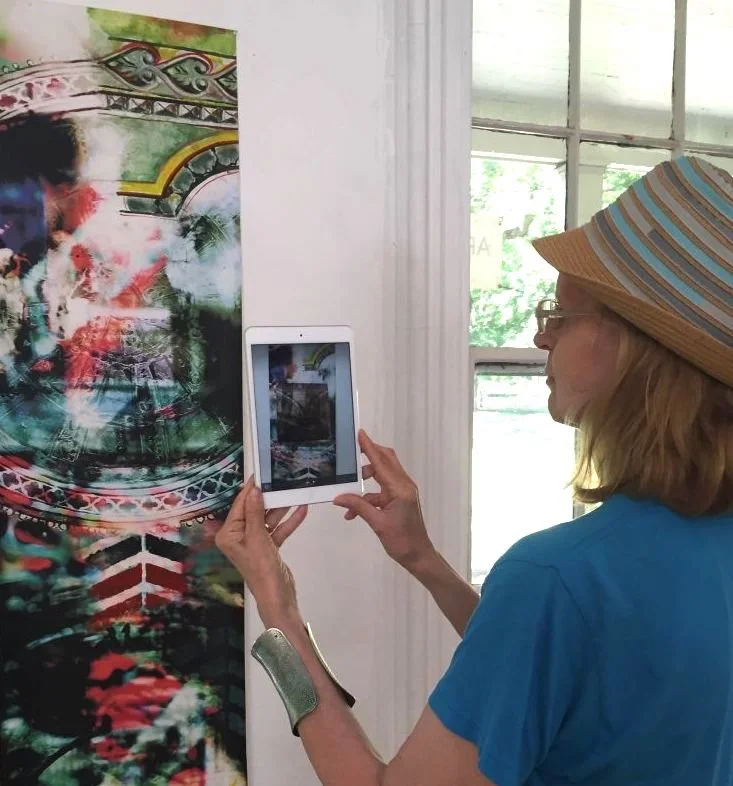
Using the iPad to view the embedded video in the History, Heritage and the Lower East Side series.
Yona Verwer is a multidisciplinary visual artist, born in the Netherlands and based in New York City. Her work explores themes of heritage, immigration, ecology, and spirituality, drawing from a wide spectrum of cultural influences.
Working across painting, installation, and new media, Verwer investigates the intersections between the human experience, the natural world, and spiritual tradition.
Her current series-in-progress are:
Entangled Shores: New Amsterdam Encounters, about the intersections of Dutch settlers with the Lenape (indigenous), enslaved Africans, and the earliest Sephardic Jews (arriving 1654).
Turning the Tide for a Living Sea, a visual exploration of plastic pollution in the oceans.
Verwer’s art is in the permanent collections of the Mizel Museum and the Philadelphia Museum of Jewish Art, amongst others. Her work has been showcased in over 30 museum exhibitions worldwide, including the Vienna Jewish Museum, Heller Museum, Reginald Lewis Museum of African-American Art, Ein Harod Museum, and the Bronx Museum..
Her work has garnered attention in publications such as The New York Times, The New Yorker, Art Criticism, Ars Judaica, The Huffington Post, among others.
Her art is featured in Heritage: Jewish Artists in America Since 1900 (Syracuse University Press, 2025) by art historian Matthew Baigell, as well as in his Jewish Identity in American Art: A Golden Age Since the 1970s, and Ori Soltes’ Tradition and Transformation: Three Millennia of Jewish Art.
Verwer’s art has been reviewed in publications such as The New York Times (William Zimmer), The New Yorker (Boris Fishman), Art Criticism (Matthew Baigell), The Huffington Post, NRC Handelsblad, and Newsday. Her writing and work have been published in multiple languages.