Exegetical
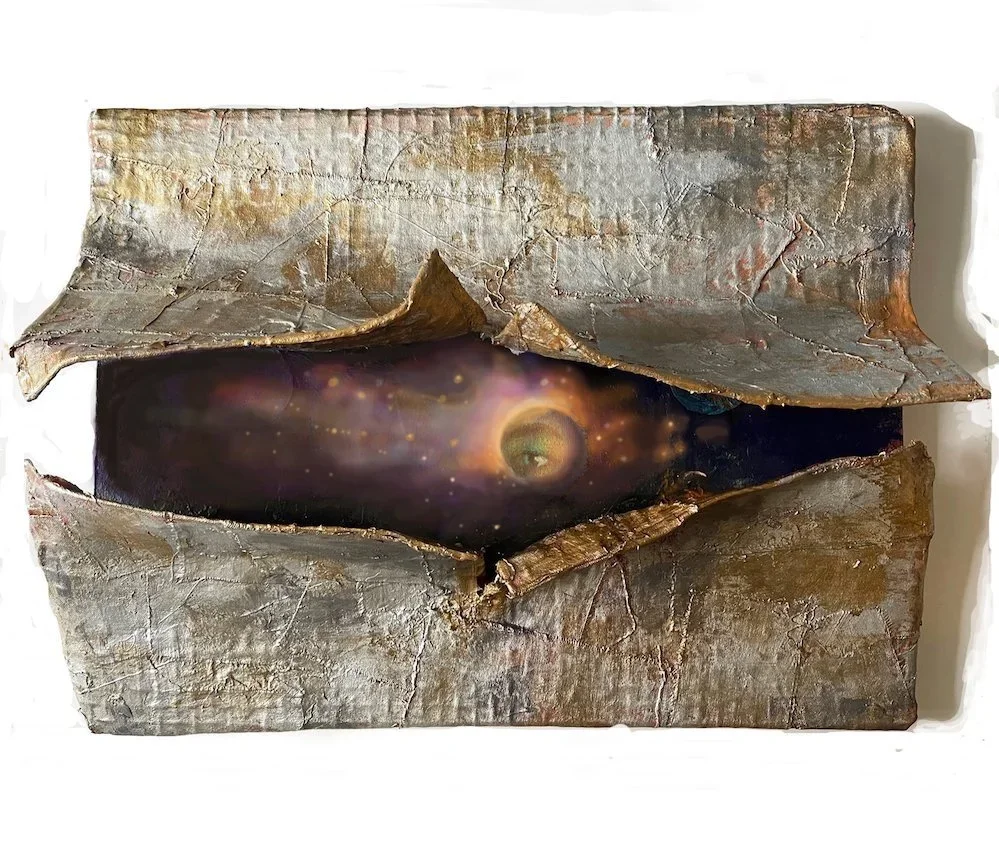
From Something to Nothing, Acrylic on sculpted canvas, 26 x 18 x 6 inches, 2023
From Something To Nothing explores the Kabbalistic concept of creation from something (yesh) to Divine nothingness (ayin).
Ayin is understood as the ultimate reality underlying all things; nothing possesses a separate, independent existence. In the painting, the rough, earthy surface, symbolizing the material world, splits open to reveal another image beneath.
At the center of this hidden layer is the divine nothingness, represented by the all-seeing eye.. The cracks, resembling tectonic plates, suggest that rupture and brokenness are not just inevitable; they are essential for the emergence of something new.
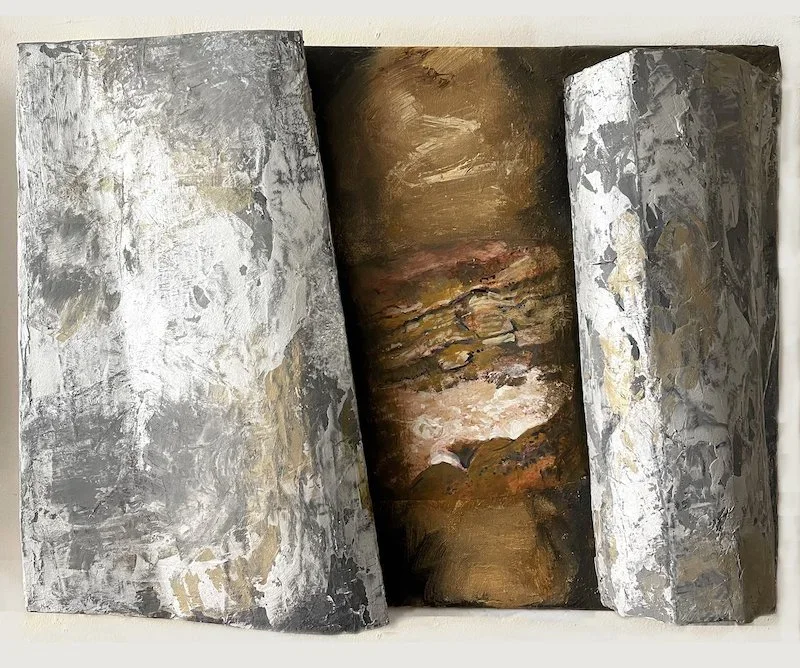
Bechukotai Blessings, Acrylic & Venetian plaster on sculpted canvas, 18 x 23 x 5 inches, 2022
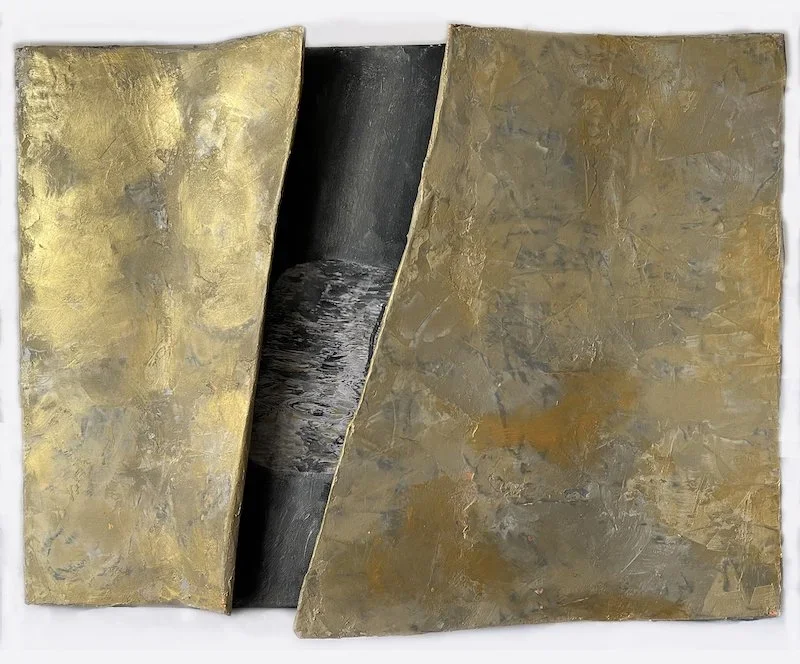
Bechukotai Curses, Acrylic & Venetian plaster on sculpted canvas, 18 x 23 x 5 inches, 2022
The series depicts the concepts of blessings, curses, and rain, as mentioned in ancient texts. These paintings explore the process of becoming more receptive to external forces, symbolized by rain. As we open ourselves to this flow of energy, we become more attuned to positive interpretations of the events around us, transforming challenges into opportunities for growth and understanding.
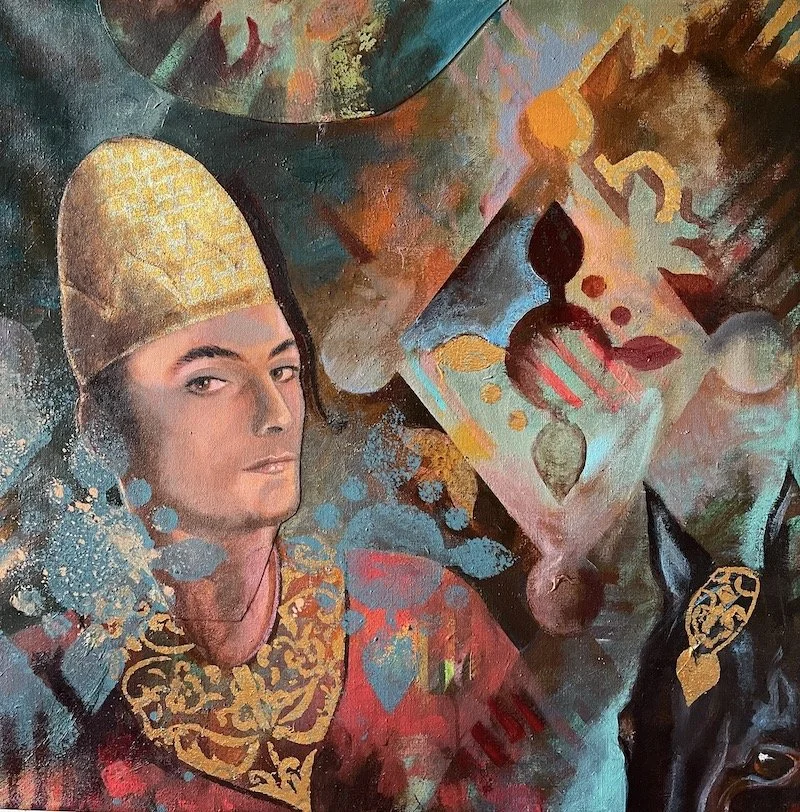
Purim
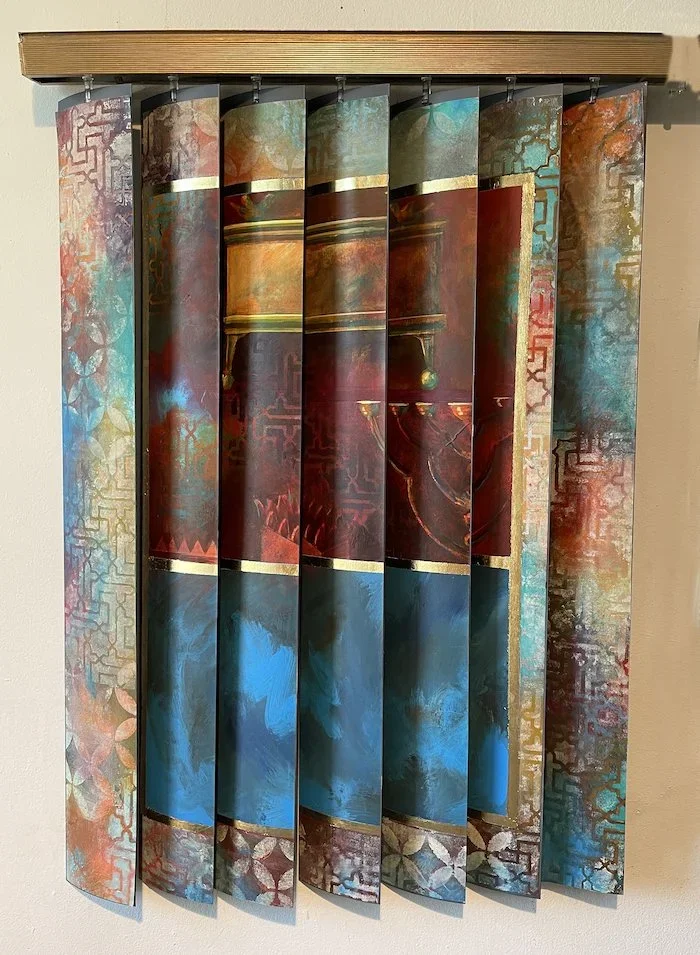
Tabernacles - Samaritans (front), Acrylic on venetian blinds, 36 x 30 x 4 inches, 2022
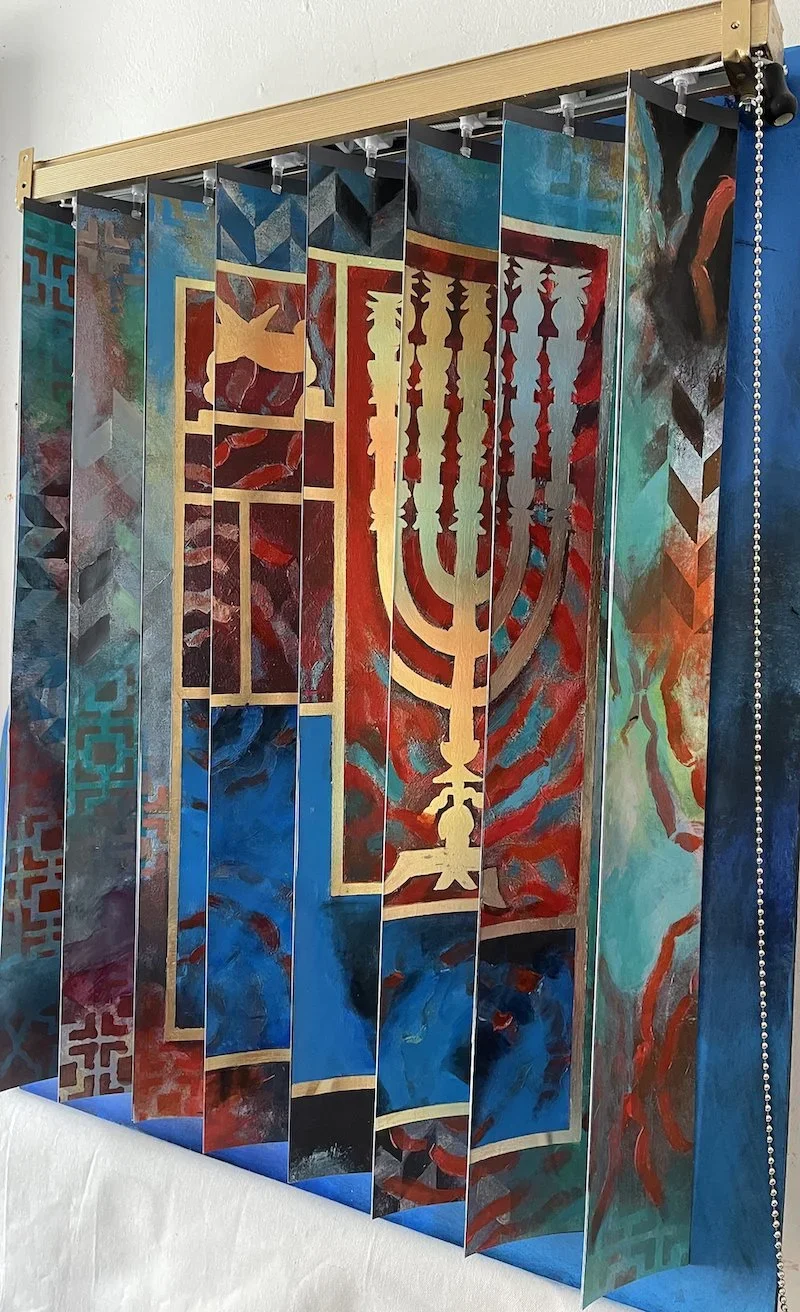
Tabernacles - Samaritans (back), Acrylic on venetian blinds, 36 x 30 x 4 inches, 2022
"Focusing on the parallel paths taken by Samaritans and Jews, in “Tabernacles” Yona Verwer sets imagery drawn from Samaritan Tabernacle drawings in conversation with medieval Jewish depictions of the Tabernacle. She printed her two tabernacles on a vertical blind, so that each could be seen to varying degrees simultaneously— or separately."
- Steven Fine, Curator, Samaritans, a Biblical People.
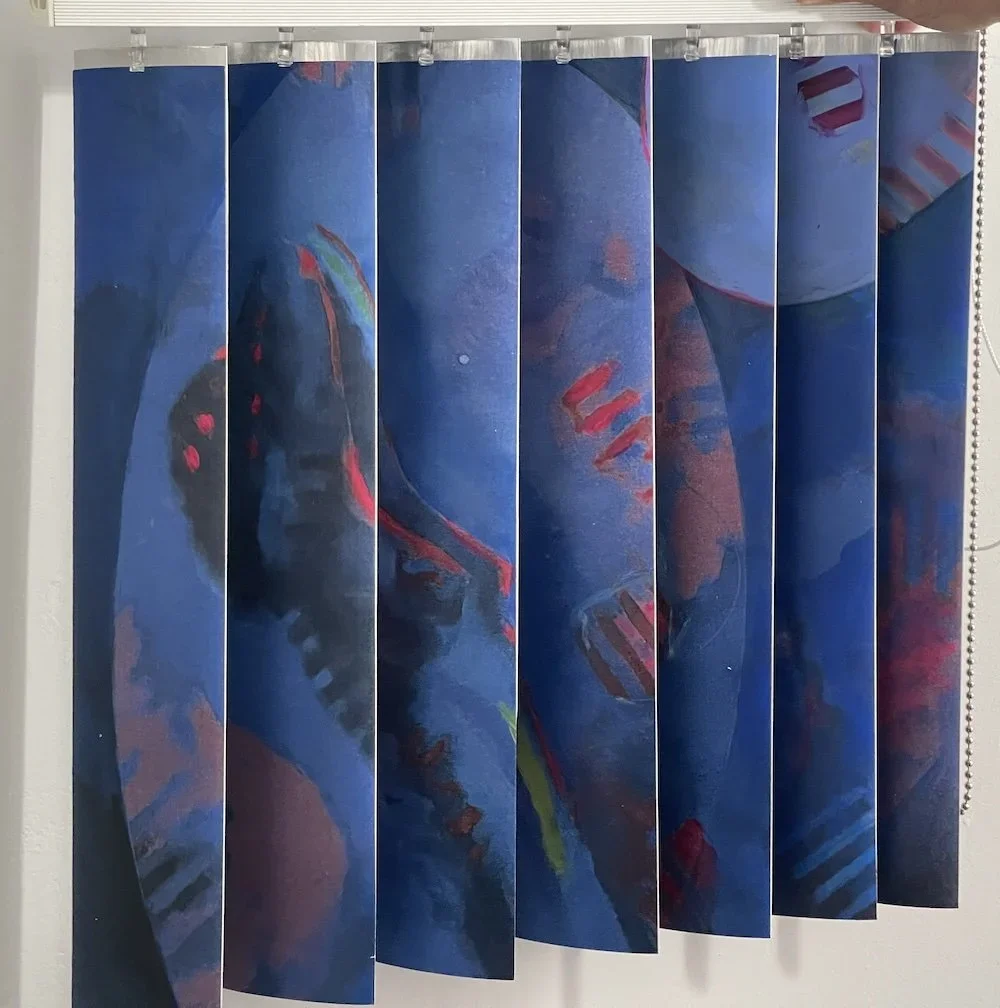
Holy Water 2, Print on Venetian blinds, 20 x 20 inches, 2024